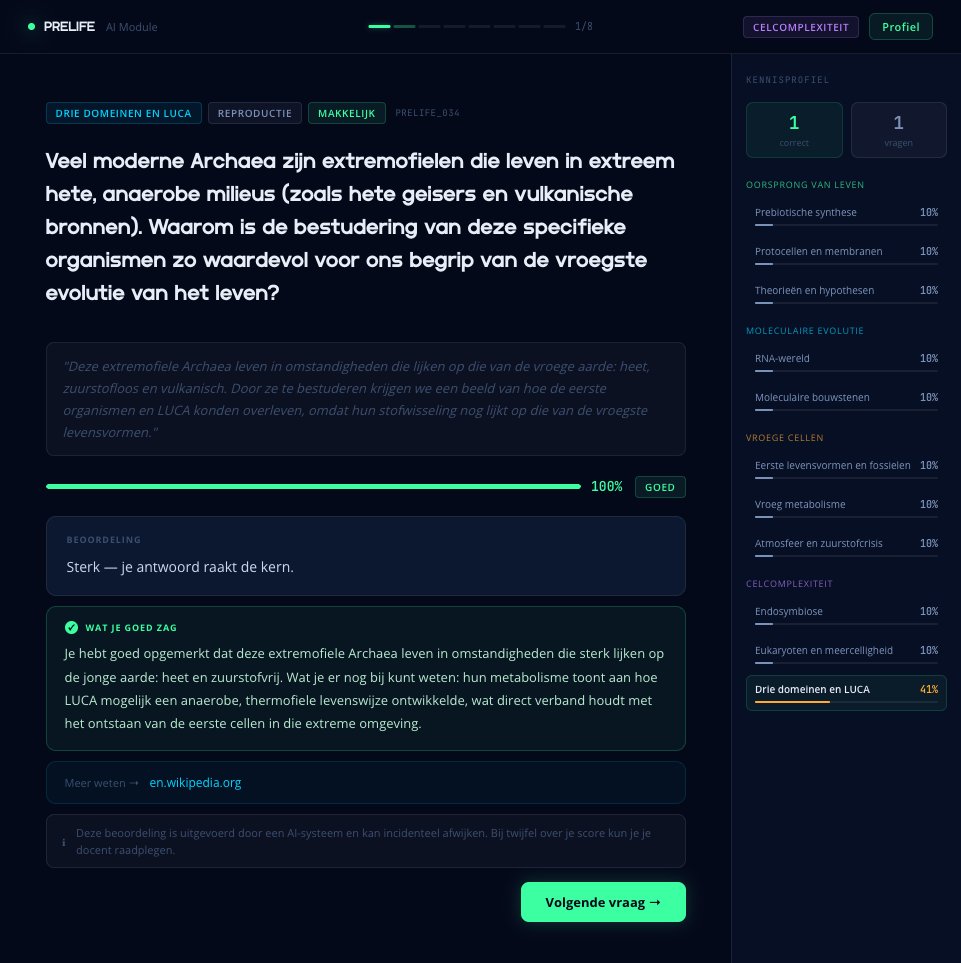
An adaptive AI tutor that helps pre-university students reason about how life began. It assesses open answers locally, spots misconceptions and keeps the teacher in control.
Context
Abiogenesis, the question of how life arose from non-living matter, is a required part of Dutch pre-university (vwo) biology. Schools tend to cover it briefly. Students mix it up with evolution, build up misconceptions and rarely get feedback on their reasoning, and no adaptive learning tools existed for the topic.
The Smart Education Lab contributes to PRELIFE, a Dutch research consortium on the origin of life that also brings its research into classrooms. For my thesis I built a learning tool for those classrooms.
Approach
Student data is sensitive, and the EU AI Act classifies AI in education as high-risk. Privacy was therefore a hard requirement: everything runs locally, without cloud APIs.
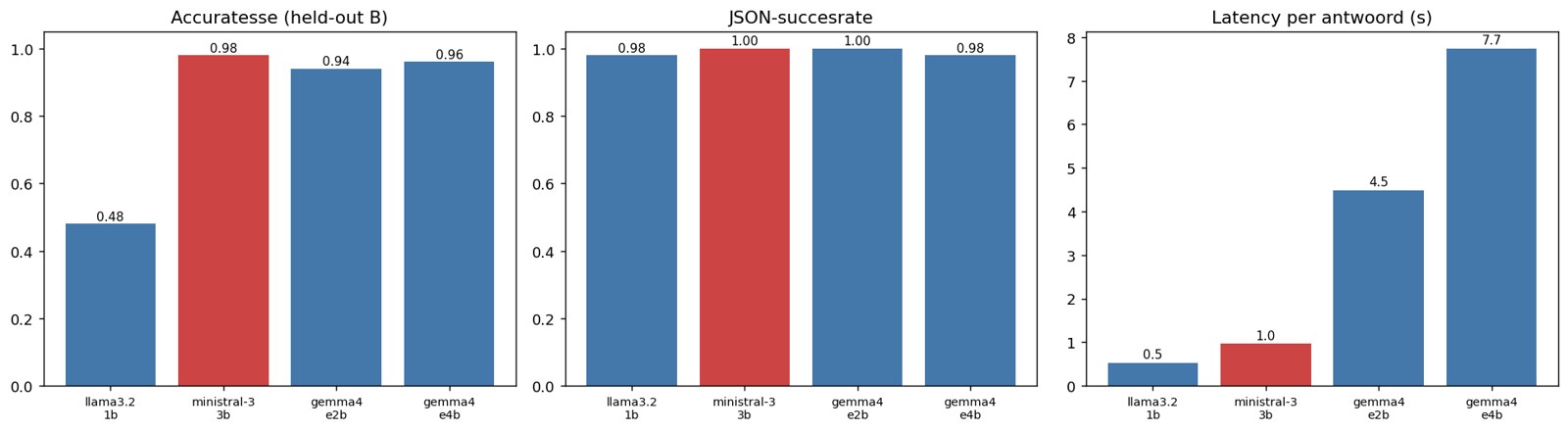
I benchmarked several small open-source LLM judges against deterministic text measures on real, hand-labelled student answers. The rule-based approach matched the best LLM, and unlike the LLM it gives the same score every time and can explain it per concept. That made it the right choice for grading students’ work.
The system
A rule-based judge scores each open answer by majority vote of three decorrelated measures: semantic concept coverage (BGE-M3 embeddings), presence of key terms, and word overlap with the model answer.
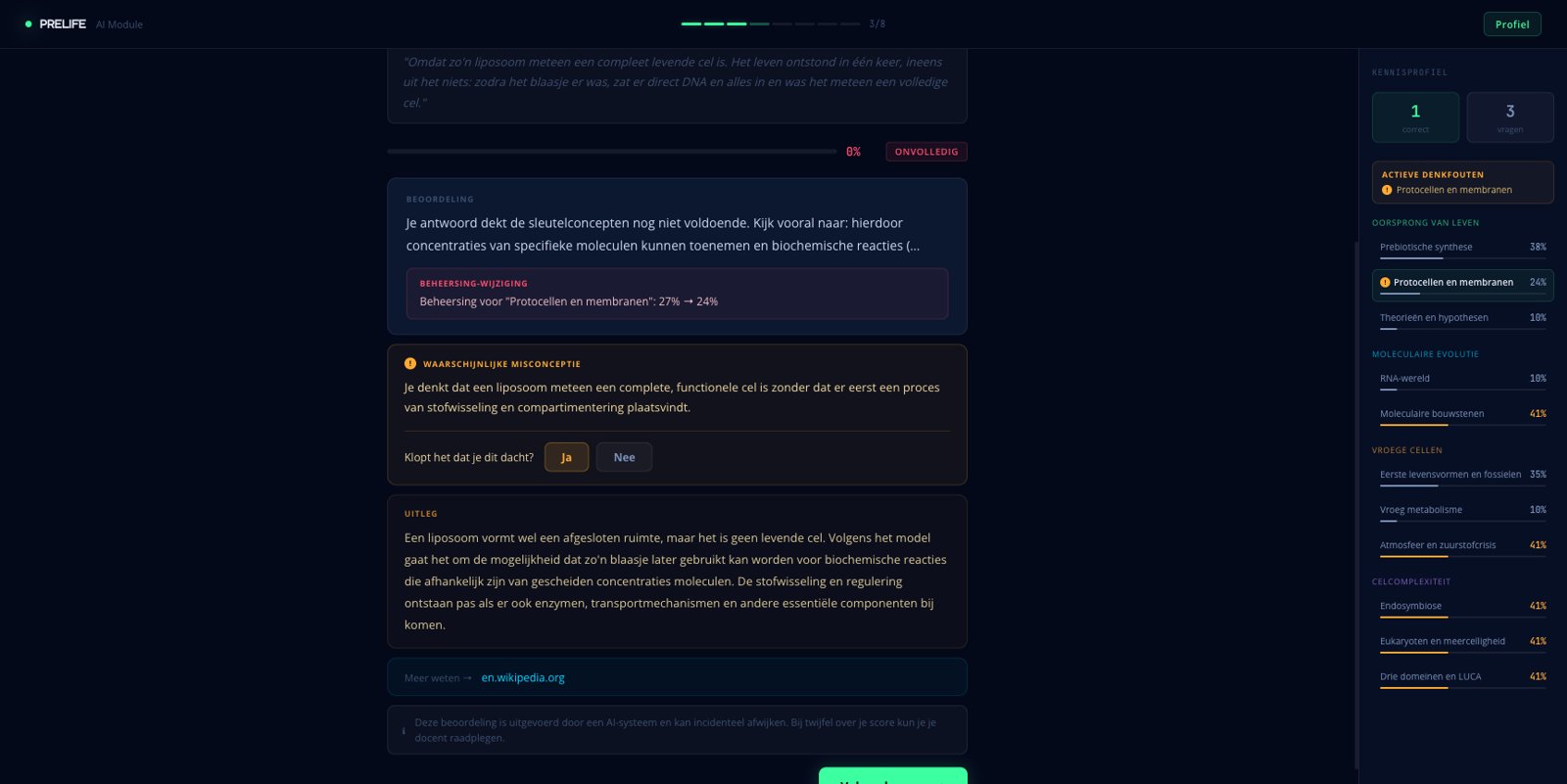
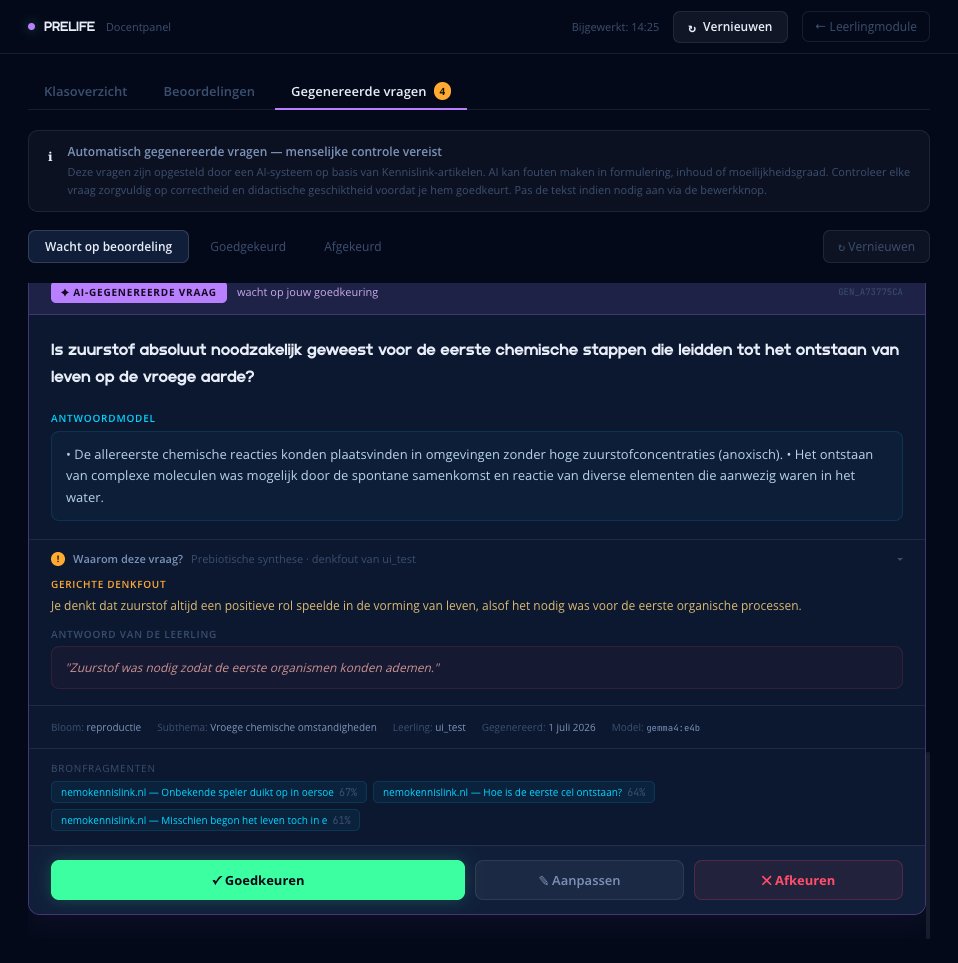
When an answer is wrong, a local language model names the likely misconception and the student confirms whether that was their reasoning. Bayesian Knowledge Tracing, Bloom levels and spaced repetition decide the next question. When a misconception persists, a RAG pipeline drafts a new practice question from NEMO Kennislink articles. A teacher approves each question before any student sees it.
Design
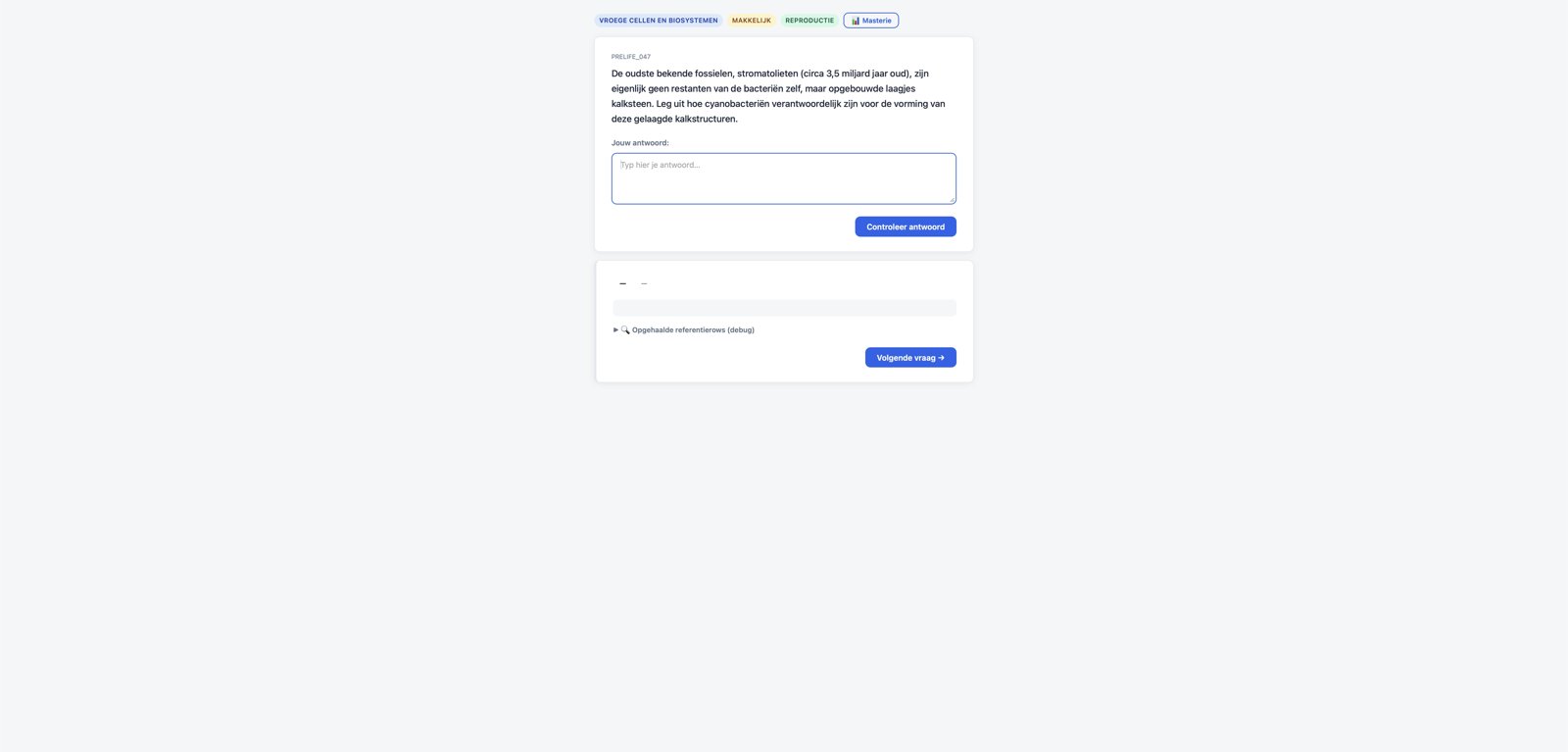
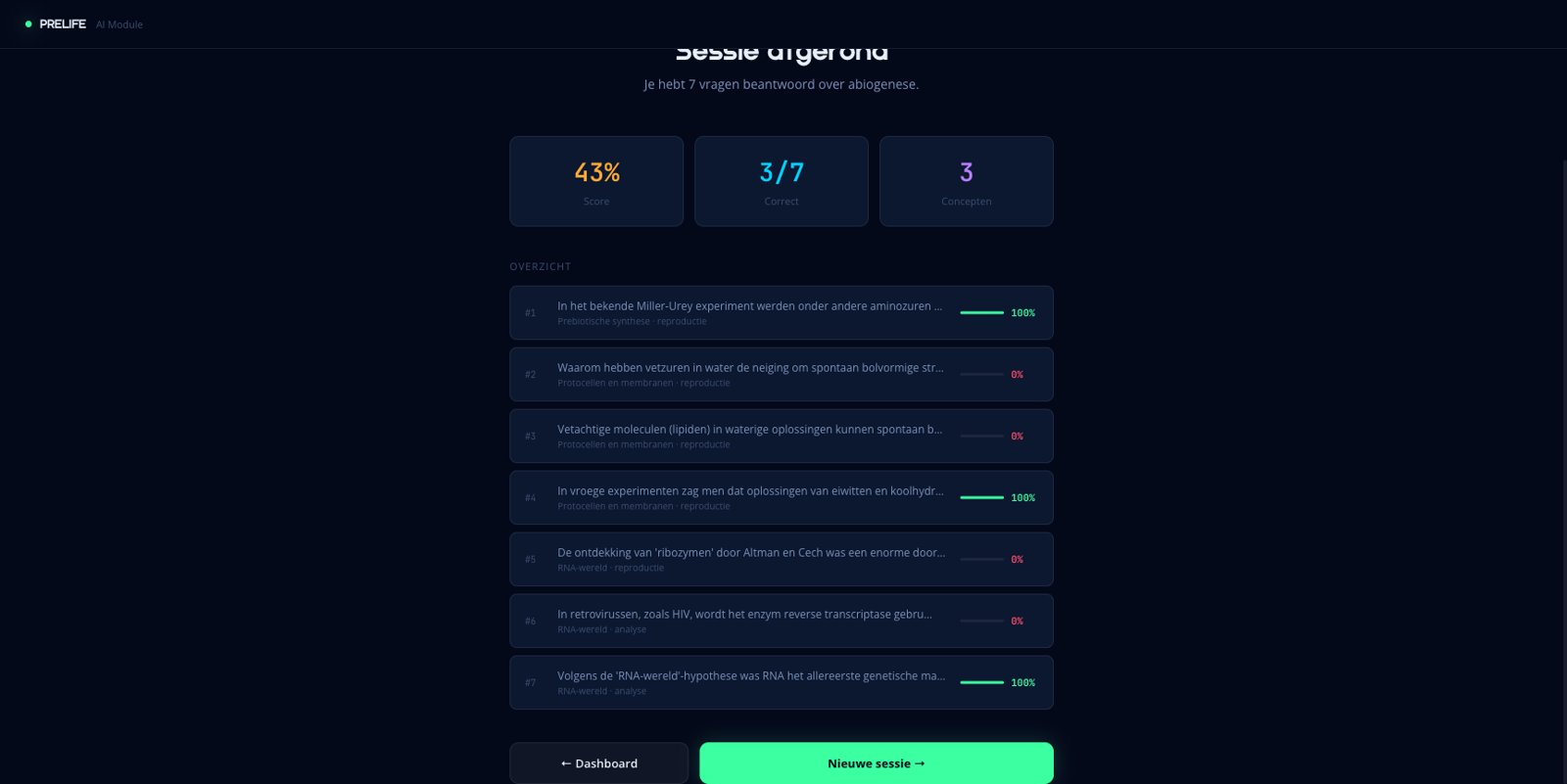
The interface went through three iterations, shaped by think-aloud sessions and feedback from the lab. It grew from a bare question-and-answer screen into themed sessions with progress per concept, a session summary and a quiet reward moment.
Results
On two independent sets of fifty real student answers, the judge scored 92% (±7%) in five-fold cross-validation and 98% on the held-out set, with a precision of 1.0. When the misconception step flags a misconception, it is right about 79% of the time.
A readability analysis showed that most rule-based hints match the vwo reading level, while the LLM-written explanations were too complex, even with explicit instructions in the prompt. In the user test, students worked through the system on their own.
Next
The result is a working, privacy-compliant prototype that runs on CPU-only hardware. The next step is a larger evaluation with biology teachers and their students.
The thesis
Selected pages from the research article (in Dutch). Tap a page to read it.
See it in action
Student demo
An adaptive session from a student’s point of view.
Teacher demo
Reviewing judgements and approving generated questions.